
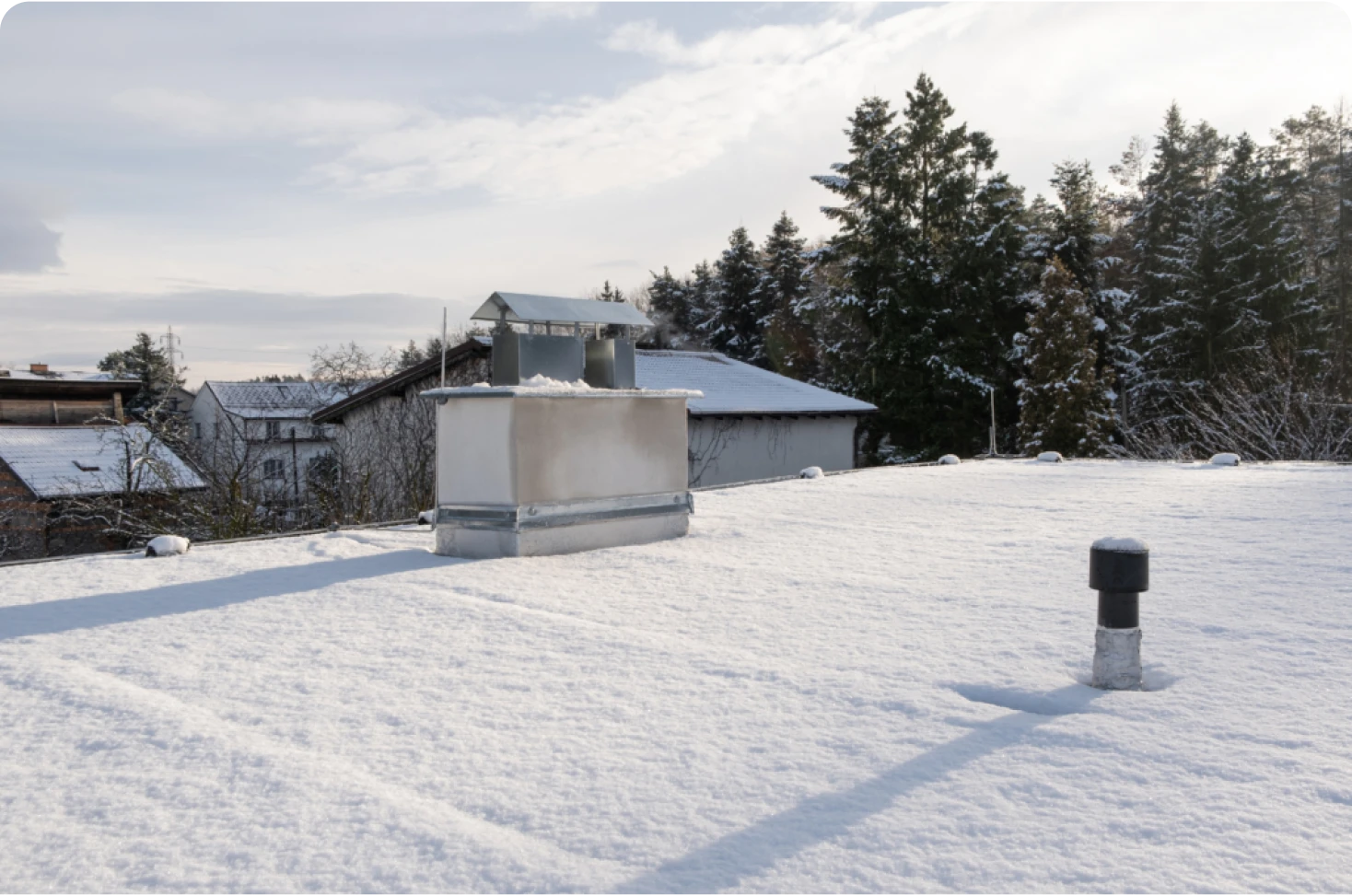
Winter can be one of the harshest seasons for any commercial roof system. Between freezing temperatures, heavy snow loads, and repeated freeze-thaw cycles, even well-built roofs can develop small issues that quickly grow into larger problems. That’s why late winter and early spring are critical times to schedule a professional roof inspection. Identifying and correcting damage now can help prevent leaks, structural stress, and costly repairs as spring storms arrive.
How Winter Weather Impacts Your Roof
Cold weather brings several unique stresses to low-slope and commercial roofing systems. Understanding how winter affects your roof highlights why seasonal inspections are so important.
Freeze–Thaw Cycling
One of the most damaging winter processes is freeze–thaw cycling. This occurs when water infiltrates small cracks, seams, joints, or areas around fasteners in the roof system.
When temperatures drop below freezing, the trapped water turns into ice and expands. This expansion creates internal pressure that forces seams apart and enlarges even the smallest cracks. When temperatures rise, the ice melts. If temperatures drop again, the water refreezes and expands once more.
This repeated cycle can occur dozens of times during a single winter. Over time, what began as a minor imperfection can grow into a significant vulnerability in the roofing system. Freeze–thaw damage is progressive and often accelerates quickly, acting as a force multiplier that worsens existing defects.
Snow and Ice Loads
Snow accumulation—especially heavy, wet snow—can add substantial weight to a roof. While modern roof structures are designed to handle snow loads, the additional weight can cause structural deflection in some cases.
Even minor deflection can place stress on seams, flashing, and membrane systems. Over time, this stress can cause seams to separate or membranes to split, creating potential entry points for water.
Cold Weather Material Stress
Low temperatures can also cause certain roofing materials to become harder and more brittle. When roof surfaces lose flexibility, they become more vulnerable to damage from routine servicing of rooftop equipment, foot traffic, or snow removal activities. Even minor impacts or scraping can damage brittle membranes during extreme cold.
Why Early Spring Inspections Matter
As winter transitions into spring, roofs that endured months of harsh conditions may have developed hidden issues. Addressing these problems early can prevent them from turning into leaks once spring weather arrives.
Spring brings increased rainfall, strong winds, and severe thunderstorms. Before these weather events begin, it’s important to ensure your roof system is in proper condition.
A professional inspection should include:
Checking seams and field membranes for splits or separation
Inspecting flashings and all roof terminations for damage
Resealing caulking that has worn, cracked, or separated
Ensuring the roof system remains properly secured
Verifying that all rooftop equipment is firmly attached and stable
Removing debris that may have accumulated during winter
Clearing drains, scuppers, and gutters to ensure proper drainage
Blocked drains or damaged seams may not seem urgent during dry winter conditions, but once spring rains arrive, these issues can quickly lead to leaks and interior damage.
Protecting Your Warranty and Roof Investment
Many commercial roofing systems include manufacturer warranties that require regular maintenance inspections. Skipping these inspections can jeopardize warranty coverage.
Routine inspections also help property owners avoid unexpected damage, prevent costly emergency repairs, and reduce the risk of business interruption due to water intrusion. Most importantly, regular maintenance helps extend the overall service life of the roof system.
Don’t Wait for a Leak
Roof problems rarely appear overnight. In many cases, leaks are the result of small issues that went unnoticed or unaddressed for months.
A late winter or early spring inspection allows roofing professionals to identify developing problems before they become expensive failures.
Don’t wait until leaks or visible damage occur. Schedule a professional roof inspection today and make sure your roof is ready for the seasons ahead.


